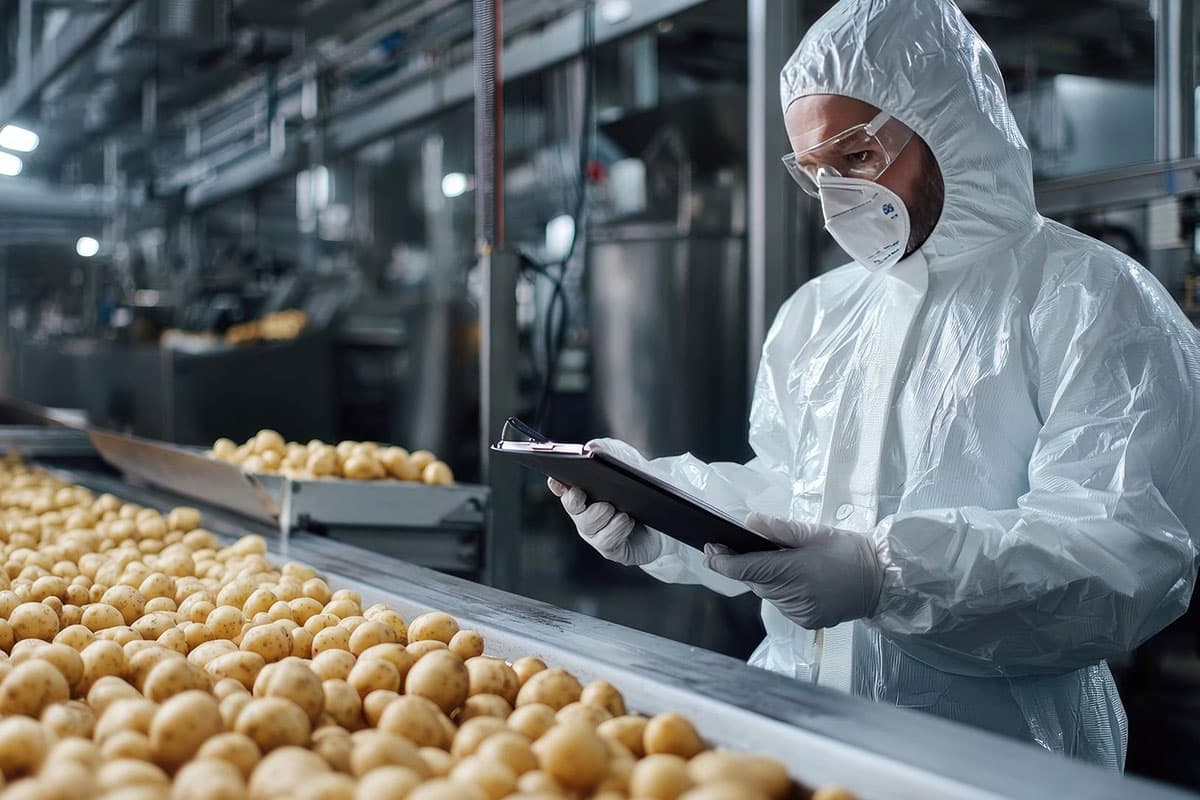
Food safety, consistency, and compliance are non-negotiable in today’s competitive food industry. Whether you produce packaged foods, beverages, dairy, bakery items, or ready meals, quality control in food manufacturing plays a critical role in protecting consumers and maintaining brand reputation.
At the same time, businesses must also invest in quality assurance in food manufacturing to prevent issues before they happen. Together, quality control (QC) and quality assurance (QA) create a complete system for operational excellence, regulatory compliance, and continuous improvement.
This practical guide explains how food manufacturers can build strong QC and QA systems using HACCP principles and ISO standards—and how digital tools like Tekmon can simplify the entire process.
What Is Quality Control in Food Manufacturing and Why It Matters
Quality control in food manufacturing refers to the operational checks and inspections used to verify that products meet defined safety and quality standards. QC happens during production and focuses on identifying defects, contamination risks, packaging errors, labeling mistakes, and process deviations.
Examples of quality control activities include:
Checking raw material quality upon receipt
Measuring temperature, pH, moisture, or weight
Inspecting packaging integrity
Conducting microbiological testing
Verifying labels and allergen declarations
Reviewing batch records before release
Strong QC processes help manufacturers reduce waste, prevent recalls, and maintain customer trust. In highly regulated markets, failing to implement effective quality control can lead to financial losses, legal issues, and reputational damage.
Transform Quality Control in Food Manufacturing
Automate audits, CAPA, supplier management, complaints, and document control with Tekmon’s Integrated Quality Management System. Improve compliance, product quality, and operational efficiency in one platform.
Understanding Quality Assurance in Food Manufacturing vs Quality Control in Food Manufacturing
Many companies use QC and QA interchangeably, but they are different functions.
Quality assurance in food manufacturing focuses on building systems, procedures, and controls that prevent quality problems from occurring. QA is proactive, while QC is reactive and verification-based.
A simple way to understand the difference:
QA builds the system
QC checks the results
For example:
QA creates sanitation procedures, training programs, supplier standards, and HACCP plans.
QC verifies whether cleaning was completed correctly, suppliers met specifications, and products passed testing.
Successful food businesses combine both disciplines through integrated food manufacturing quality assurance systems.
HACCP and Quality Control in Food Manufacturing: The Foundation of Food Safety
HACCP (Hazard Analysis and Critical Control Points) is one of the most important frameworks for quality control in food manufacturing. It helps businesses identify food safety hazards and establish controls before products reach consumers.
The seven HACCP principles include:
Conduct hazard analysis
Identify critical control points (CCPs)
Set critical limits
Establish monitoring procedures
Define corrective actions
Verify the system works
Maintain records and documentation
For example, in a cooked food facility, a CCP may be cooking temperature. If a batch fails to reach the required temperature, corrective action must be taken immediately.
HACCP transforms quality control from random inspections into a structured risk-based process.
ISO Standards for Quality Assurance in Food Manufacturing
In addition to HACCP, many manufacturers follow ISO standards to strengthen quality assurance in food manufacturing.
ISO 9001 for Food Manufacturing Quality Assurance
ISO 9001 focuses on quality management systems, customer satisfaction, process control, and continuous improvement. It supports:
Standardized procedures
Internal audits
Corrective actions
Performance measurement
Leadership accountability
ISO 22000 for Quality Control in Food Manufacturing
ISO 22000 combines food safety management principles with HACCP methodology. It is widely used by food processors, packaging companies, ingredient suppliers, and logistics providers.
Benefits include:
Better food safety risk management
Stronger traceability
Improved supplier control
Easier regulatory compliance
Together, these standards create a robust framework for food manufacturing quality assurance.
Key Steps to Build Quality Control in Food Manufacturing
Creating a reliable QC program does not need to be overly complex. Start with these practical steps.
1. Define Product Specifications
Document standards for raw materials, packaging, finished goods, shelf life, labeling, and storage. Without clear specifications, quality cannot be measured.
2. Control Incoming Materials
Supplier quality directly affects final product quality. Inspect ingredients and packaging at receipt to detect issues early.
3. Monitor Production Processes
Track critical process parameters such as:
Time
Temperature
Weight
Metal detection
Fill volume
Seal integrity
4. Inspect Finished Products
Use sampling plans, visual inspections, and laboratory testing before release.
5. Record Everything
Accurate records are essential for audits, recalls, investigations, and continuous improvement.
How Quality Assurance in Food Manufacturing Prevents Recurring Problems
Strong quality assurance in food manufacturing helps businesses move beyond fixing the same issues repeatedly. Instead of only reacting to defects after they occur, QA systems focus on identifying root causes and preventing problems from returning. This approach saves time, reduces waste, and improves consistency across production lines.
For example, if packaging seals fail multiple times, the issue may not be the packaging itself. The real cause could be incorrect machine settings, inconsistent maintenance, poor operator training, or low-quality packaging materials. A well-structured QA process investigates these factors systematically and implements long-term corrective actions.
This is where CAPA (Corrective and Preventive Action) becomes especially valuable. Corrective actions resolve the immediate issue, while preventive actions ensure the same failure does not happen again. Over time, this creates a culture of continuous improvement and stronger operational control.
When businesses invest in effective QA systems, they reduce recurring complaints, lower production costs, and build greater confidence with customers and regulators.
How Tekmon Supports Quality Control in Food Manufacturing
Tekmon provides an integrated Quality Management System designed to simplify and strengthen quality control in food manufacturing. Instead of relying on disconnected spreadsheets, paper forms, and manual follow-ups, manufacturers can manage quality processes in one centralized platform.
Tekmon automates tracking, reporting, and issue resolution, helping teams maintain compliance while improving efficiency. Quality data becomes easier to capture, review, and act on in real time. This allows managers to identify trends faster, respond to deviations sooner, and maintain stronger control over daily operations.
The platform supports audits, inspections, CAPA management, supplier assessments, complaint handling, and document control. Because all information is stored in one system, traceability becomes easier and audit preparation requires far less manual effort.
By combining operational visibility with workflow automation, Tekmon helps food manufacturers improve product quality, meet regulatory requirements, and create more reliable processes across every department.
Discover Tekmon QMS in Action
See how Tekmon QMS can transform your food quality control processes with a personalized demo. Explore automated audits, supplier assessments, and more to ensure compliance and efficiency.
Tekmon Tools for Food Manufacturing Quality Assurance in Daily Operations
Audits & Inspections for Quality Control in Food Manufacturing
Eliminate paperwork with automated data collection, validation, and analysis across desktop and mobile devices.
Features include:
Mobile offline functionality
Photos, signatures, attachments
Workflows & approvals
Formula-based validation
Custom PDF reports
Custom BI analytics
Findings Management for Quality Assurance in Food Manufacturing
Capture, prioritize, and resolve findings quickly through:
Centralized tracking
Automated alerts
Priority tagging
Real-time updates
Trend analysis reports
Action documentation
CAPA for Food Manufacturing Quality Assurance
Corrective and preventive actions become easier with:
CAPA planning
Proactive alerts
Approval workflows
Audit-ready version control
Supplier Assessment for Quality Control in Food Manufacturing
Supplier quality can be automated through:
Supplier self-assessments
Supplier audits
Supplier defect analysis
SLA monitoring
Incoming quality control
Quality of deliverables
Transform Your Supplier Quality Today
Take control of supplier performance, reduce risks, and streamline audits with Tekmon’s integrated supplier quality management platform. Experience how automation enhances reliability and compliance across your entire supply chain.
Complaint Management for Quality Assurance in Food Manufacturing
Turn customer complaints into improvement opportunities through:
Complaint prioritization
Corrective action assignment
Root cause analysis
Proactive process improvement
Document Management for Food Manufacturing Quality Assurance
Maintain audit readiness with:
Centralized storage
History tracking
Granular access control
Automated integrations
Custom PDF exports
Why Digital Systems Improve Quality Control in Food Manufacturing
Many food manufacturers still depend on paper records, spreadsheets, and disconnected software tools. While these methods may seem familiar, they often slow decision-making, create duplicate work, and increase the risk of missing critical issues.
Digital systems transform quality control in food manufacturing by giving teams immediate access to accurate and up-to-date information. When inspections, deviations, supplier issues, and corrective actions are managed digitally, problems can be identified and resolved much faster. This reduces delays, minimizes waste, and supports stronger compliance.
A modern Quality Management System also improves traceability. If a product issue occurs, teams can quickly review batch data, inspection records, supplier history, and corrective actions without searching through multiple files. This is especially valuable during audits, customer requests, or recall situations.
Digital platforms also standardize workflows across multiple facilities, ensuring that procedures are followed consistently. With better visibility and automated reporting, managers can focus less on administration and more on continuous improvement.
Templates That Strengthen Food Manufacturing Quality Assurance
Pre-built templates can significantly speed up implementation. Tekmon offers templates aligned with best practices, including:
ISO 9001 Templates
HACCP Process Templates
ISO 22000 Process Templates
Non-Conformities
Root Cause Analysis
Supplier Assessments
Incoming Material Inspection
Vendor Quality Assurance Checklist
Customer Complaint Form
Labeling & Packaging Inspection
AQL Tracking Template
Non-Conforming Material Report
Templates reduce setup time while improving consistency.
TOP 15 FEATURES TO LOOK FOR IN QUALITY MANAGEMENT SOFTWARE
Learn more about the 15 essential features of a High-Quality QMS software in our detailed guide.
Actionable Tips for Better Quality Control in Food Manufacturing
Improving quality control in food manufacturing often starts with small but consistent operational changes. One of the most effective steps is regular employee training. When frontline teams clearly understand procedures, hygiene standards, and reporting expectations, errors decrease and accountability improves.
Another important priority is using data to guide decisions. Instead of relying on assumptions, manufacturers should monitor recurring defects, customer complaints, downtime, and supplier performance. These insights help reveal hidden patterns and improvement opportunities.
Standardizing inspections is also essential. When every operator follows the same process using clear digital forms or approved checklists, results become more reliable and easier to compare over time.
Speed matters as well. Small deviations can quickly become costly quality failures if they are ignored. Rapid response processes help contain issues before they affect customers or production schedules.
Finally, reviewing suppliers regularly and automating documentation can deliver major long-term benefits. Strong supplier control reduces incoming material risks, while automated records save time and improve audit readiness. Together, these practical actions create a stronger and more resilient quality system.
Final Thoughts on Quality Control in Food Manufacturing
Strong quality control in food manufacturing is no longer optional—it is essential for safety, compliance, profitability, and customer trust. But inspections alone are not enough. Businesses also need strong quality assurance in food manufacturing systems that prevent problems before they happen.
By combining HACCP principles, ISO standards, and modern digital tools, manufacturers can create reliable and scalable operations.
Tekmon helps food manufacturers unify audits, CAPA, supplier management, complaints, documentation, and analytics into one smart platform—making food manufacturing quality assurance simpler, faster, and more effective.
If your business is ready to modernize quality processes, now is the time to move from reactive quality checks to proactive quality excellence.