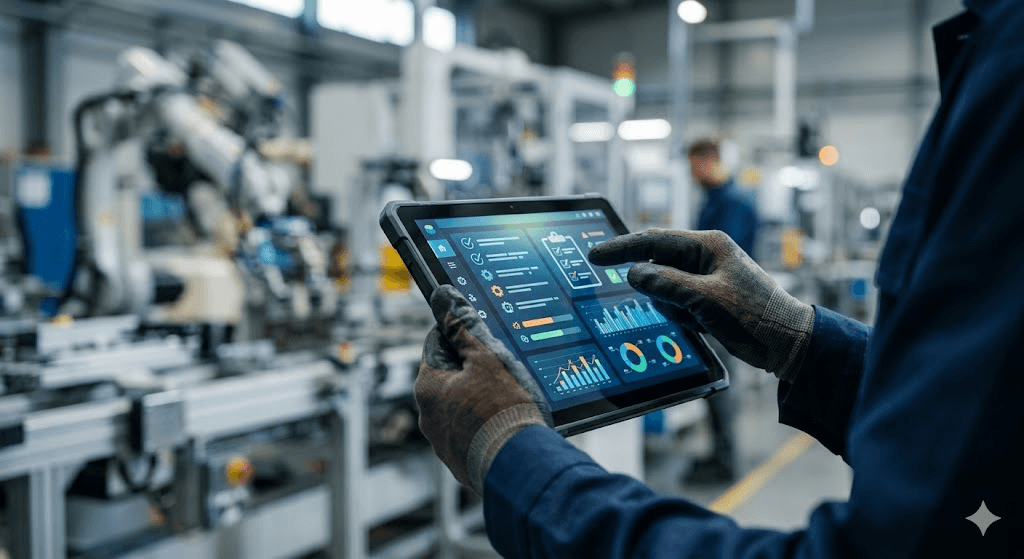
Turn Paperless Manufacturing Into a Risk Advantage
Going paperless in manufacturing is not just about replacing clipboards with tablets. It is about making better decisions, faster, with less risk on the shop floor. When work is still run on paper, it is easy for steps to be skipped, data to be lost, and problems to stay hidden until they are costly.
Right now, manufacturers are feeling real pressure. Economic swings, tighter rules, and ongoing labor gaps all make it harder to keep plants safe, compliant, and productive. Paper processes slow you down at the exact time you need more speed and clarity.
Paperless manufacturing today means your data, workflows, and decisions are connected across plants, teams, and shifts. Forms, approvals, and records move in real time, not at the speed of someone walking paperwork to an office. With a no-code operations platform, you can build and adjust those workflows without waiting on long IT projects.
In this article, we will walk through a risk-based roadmap for going paperless in phases. By focusing on risk first, then rolling out with care, validating each change, and leading real change on the shop floor, you can cut disruption and build a safer, higher-quality, and more sustainable operation.
Map Your Risk Landscape Before You Go Paperless
Before moving even one checklist off paper, it helps to know where your biggest risks sit today. Not all processes carry the same weight, so not all should be digitized at the same time.
Key risk areas often include:
• Health and safety incidents and near misses
• Quality escapes that reach customers
• Asset failures that cause unplanned downtime
• ESG non-compliance and reporting gaps
• Data integrity issues in manual logs and paper trails
To sort out where to start, it helps to combine two lenses. First, look at risk and impact: how likely something is to go wrong, how bad it is when it does, and how much regulatory attention it brings. Second, look at practical factors like how much data you already collect, how complex the process is, and how ready people are for change in that area.
Cross-functional workshops are very useful here. Bring together operations, HSE, quality, maintenance, and IT. Ask simple questions like, "Where do we still rely on paper or spreadsheets?" and "What workarounds do people use when the official process is too slow?" This is where many plants discover hidden shadow processes that never make it into official procedures.
Once you see the full picture, you can target high-risk workflows first, such as:
• Incident and near-miss reporting
• Line clearance and changeover checks
• Critical maintenance and asset inspections
• Environmental or sustainability checks
These use cases give fast, visible wins when they move off paper. That early success is what makes it easier to justify a broader paperless manufacturing rollout.
Design a Phased, Risk-Based Rollout Plan
A good paperless roadmap does not flip everything at once. It moves in clear, manageable phases that build trust and results over time.
A simple structure can look like this:
• Phase 1: Pilot in one focused area
• Phase 2: Scale to priority lines or plants
• Phase 3: Expand to enterprise-wide standards
• Phase 4: Continuously improve and refine
Choosing the right pilot is key. Look for a process that has:
• Clear risk reduction potential, like safety or quality
• A scope that is small enough to manage but big enough to matter
• Leaders who are engaged and ready to coach
• Frontline supervisors who are open to change and can become champions
Each phase should include clear objectives and KPIs, basic process standardization, configuration and testing inside a no-code platform, a defined go-live plan, and built-in feedback loops to adjust quickly.
Timing also matters. Many plants in areas with hot summers and milder springs plan big changes in the second and third quarters, when the weather is more stable and people are not dealing with winter issues. Align pilots with planned shutdowns, validation windows, or upcoming audits so you can test, train, and fix issues without extra stress.
Validate Digital Workflows Without Slowing Production
In regulated or quality-critical plants, you cannot just turn on a new digital form and hope for the best. You need to show that the digital workflow does what the paper one was meant to do, and that the data can stand up to internal and external review.
Common needs include:
• Clear traceability of who did what, when, and on which asset or batch
• Reliable audit trails that capture every change to records
• Strong data integrity so records are complete, accurate, and readable over time
A practical approach to validation can be risk-based. Spend more effort testing workflows that touch product quality, safety, or compliance, and less on low-risk support tasks. Use user acceptance testing with actual frontline operators and technicians to confirm that each digital step matches what needs to happen in real life.
No-code platforms help here by making it easy to build:
• Configurable templates that match your existing SOPs
• Controlled change management with approvals for updates
• Version history so you always know which form was in use at a given time
When digital SOPs, checklists, and maintenance routines are validated properly, they tend to reduce batch rework, deviations, and audit findings compared to paper. It becomes easier to prove that the right steps were followed, instead of hunting for missing sheets in a folder.
Lead Change on the Shop Floor, Not Just in the Boardroom
Paperless manufacturing fails when it is seen as something done to the shop floor rather than with it. Many people worry that new digital tools mean more tracking, more tasks, or even fewer jobs. These fears are real and deserve respect.
A frontline-first approach helps shift the story. Invite operators, techs, and supervisors into the design of forms and workflows. With a no-code platform, you can show them early versions, gather their ideas, and adjust layouts or steps in days instead of months.
Training should be short, practical, and tied to real shifts. Things that work well include:
• Quick, scenario-based sessions on the actual line
• Simple digital work instructions linked to each task
• Peer champions on every shift who can coach in the moment
• Easy ways to ask for help without leaving the work area
Feedback is just as important. Give people clear ways inside the platform to flag confusing steps or suggest better flows. Highlight wins, like less double entry, fewer errors, or faster approvals, and connect those wins to safety, quality, and ESG results, not just to management targets.
Turn Your Roadmap Into Measurable, Continuous Gains
Once your roadmap is in motion, the real value comes from measuring and improving over time. A focused KPI set might track:
• Incident rates and near misses reported
• Right-first-time quality and rework levels
• Mean time to repair and asset uptime
• Audit findings linked to process or data gaps
• Time saved compared to old paper routes
With a no-code operations platform like the one we build at Tekmon, you can pull this data into regular reviews. Monthly risk and performance huddles give teams a chance to see trends, refine forms, automate more steps, and share what works across plants.
After your high-risk processes are running smoothly in digital form, you can expand to secondary workflows such as contractor management, ESG reporting, and internal audits. Each new wave builds on the trust, skills, and data you already have.
Paperless manufacturing is not a single project; it is a way of running operations that grows with your business. By staying risk-based, phased, and human-centered, you can move off paper at a pace that feels safe and still brings steady gains for safety, quality, and sustainability.
Transform Your Shop Floor With a Fully Digital Workflow
If you are ready to eliminate paper forms, delays, and data errors, Tekmon can help you move to true paperless manufacturing. Our team works with you to map your current workflows, digitize critical processes, and give your operators simple, reliable tools on the shop floor. Share your goals and challenges with us so we can outline a practical roadmap tailored to your operations. To discuss your project and next steps, contact us today.