In modern industrial environments, the convergence of strict safety standards and tight production schedules creates a complex operational challenge. As shifts draw to a close and teams rush to finalize tasks, the integrity of safety protocols is often tested.
For HSE Directors and Site Managers, risk management extends beyond immediate incident response; it requires the assurance that all preventative measures were rigorously followed. When an incident occurs—or during a routine audit—key questions arise:
Were gas levels (LEL) verified immediately before work commenced?
Was the fire watch physically present, or was the log pre-filled?
Is the paper permit legible, signed, and retrievable?
If a Permit to Work (PTW) system relies exclusively on paper forms and physical signatures, answering these questions with absolute certainty is difficult. In high-stakes industries, this lack of data visibility represents a significant operational liability.
This article examines the limitations of traditional paper-based systems and how digital transformation is evolving the Permit to Work from a bureaucratic requirement into a robust, real-time safety management tool.
Part 1: The Limitations of Paper-Based Processes
For decades, paper permits have been the industry standard. However, in dynamic and hazardous environments, static forms present inherent weaknesses.
1. Verification Gaps and Data Integrity A primary challenge in high-risk workflows is ensuring that checks are performed at the correct time and location. Paper forms cannot verify if a user is physically at the worksite or if a gas detector reading is current. This creates a reliance on trust rather than verification, leaving room for procedural errors or "tick-box" compliance where forms are completed without the necessary physical checks.
2. Lack of Oversight on Simultaneous Operations (SIMOPS) Once a paper permit is signed and taken to the field, it effectively leaves the immediate view of the central management team. This creates a blind spot regarding Simultaneous Operations (SIMOPS). Scenario: One team is authorized for Hot Work on Level 2, while another is authorized for a Line Break (releasing gases) on Level 1. Without a centralized digital overview, approvers may not immediately identify the conflict between these two valid, yet mutually hazardous, permits.
3. Static Information vs. Dynamic Conditions A paper permit records site conditions at the specific moment of issuance. It cannot update itself. If environmental conditions change—such as a shift in wind direction carrying hazardous vapors—a paper form remains silent. Digital systems, conversely, can integrate with IoT sensors or weather data to continuously assess risk and alert users to changing parameters.
Part 2: The Operational Cost of Administration
Beyond safety, efficiency is a key driver for business continuity. Managing high-risk permits via physical transit and manual signatures incurs significant time costs.
Reducing the "Transit Time" The traditional workflow often requires contractors to physically travel between the worksite, the permit office, and supervisor locations to secure signatures. If a site issues 10 permits a day, and each involves 45 minutes of transit and waiting time, this results in significant lost productivity daily. Furthermore, these administrative bottlenecks can inadvertently encourage teams to bypass protocols to meet production deadlines.
Part 3: The Tekmon Solution — Logic, Enforcement, and Visibility
Tekmon’s Digital Permit to Work (PTW) solution moves beyond simply digitizing a PDF; it digitizes the authority and validation process.
1. Systemic Enforcement (Logic Gates) The platform utilizes conditional logic to ensure compliance. It prevents users from advancing to the next step until specific criteria are met. Example: A user cannot submit a Hot Work permit request until the "Gas Test" field is populated with data within safe limits. The system enforces the protocol through code, ensuring no steps are skipped.
2. Digital Evidence and Verification Digital systems replace assumption with evidence.
Visual Proof: The system can require time-stamped photos to verify that a worksite is clear of debris.
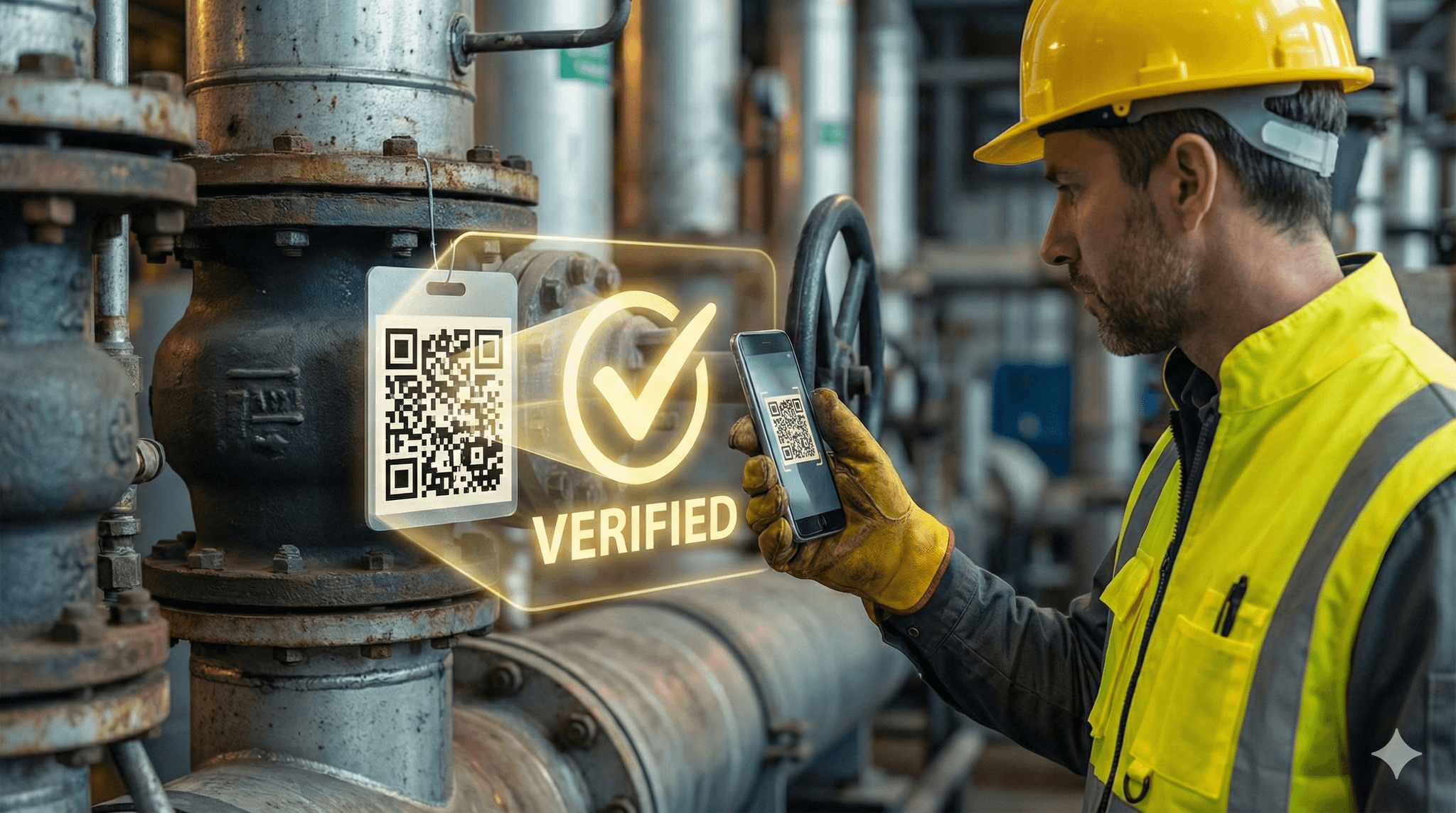
Presence Verification: Fire Watch personnel can be required to scan a QR code or NFC tag at the location to prove physical presence.
Certification Checks: The system automatically cross-references welder certifications against the database, blocking permits if a certification has expired.
3. Remote Approval and Emergency Protocol Managers can review risk assessments (JSA) and site photos, and grant approvals remotely via mobile devices. Crucially, the system improves emergency response. In the event of an incident, an HSE Director can digitally revoke all active permits instantly, sending a "STOP WORK" notification to all connected devices on site.
Part 4: Strategic Benefits for Safety Leadership
Implementing a digital PTW system represents a shift from administrative policing to proactive safety management.
Facilitating Compliance By automating checks and guiding workers through the correct procedures step-by-step, the system makes compliance the path of least resistance. It empowers workers with clear, accessible instructions rather than burdening them with paperwork.
Audit Readiness and Data Intelligence In the event of an external audit (e.g., ISO 45001) or an incident investigation, digital platforms provide an immutable audit trail.
Who approved the work?
What was their GPS location at the time of approval?
When was the work started and completed?
This transparency protects the organization and provides the data needed to move from lagging indicators (accident rates) to leading indicators (compliance trends).
Conclusion
While the physical risks of industrial work remain constant, the tools used to manage them must evolve. Paper permits served their purpose in an era before ubiquitous connectivity. Today, relying on static forms creates unnecessary opacity.
Tekmon’s Digital PTW ensures that safety protocols are visible, efficient, and verifiable, integrating risk management seamlessly into the daily operational workflow.
Q&A: Common Questions from Industry Leaders
Q1: Connectivity at our site is intermittent or non-existent in some areas. Will a digital system work?
A: Yes. Tekmon’s mobile app is designed with robust "Offline Mode" capabilities. Users can complete checks and fill out forms without an internet connection. Data is stored locally on the device and automatically syncs to the cloud once a signal (Wi-Fi or 4G/5G) is restored, ensuring work continuity.
Q2: Can we manage different permit types (Hot Work, Confined Space, etc.) in one application?
A: Yes. The system is highly configurable. Specific workflows can be created for different risk categories. For example, a "Confined Space" permit can trigger requirements for rescue plans and atmospheric monitoring, while a "Work at Height" permit will prompt for harness checks.
Q3: How do we handle external contractors who do not have access to internal systems?
A: Tekmon is designed to support the extended workforce. Contractors can be granted secure, limited access to the app to initiate permits without accessing sensitive internal company data. Alternatively, a "Kiosk Mode" on shared tablets can be utilized at site entrances.
Q4: Are digital signatures legally binding?
A: Yes. Digital signatures and the comprehensive audit trails provided by enterprise-grade platforms are generally recognized as legally binding and compliant with major regulatory standards (such as OSHA, HSE UK, and EU directives). Due to timestamps and identity verification, they are often preferred by auditors over handwritten records.
Q5: Does implementation require extensive training?
A: No. The interface is designed to be user-friendly and intuitive, similar to standard consumer apps. Most field workers can learn the basics in under 30 minutes. The app itself acts as an on-the-job guide, walking new workers through the required safety steps.