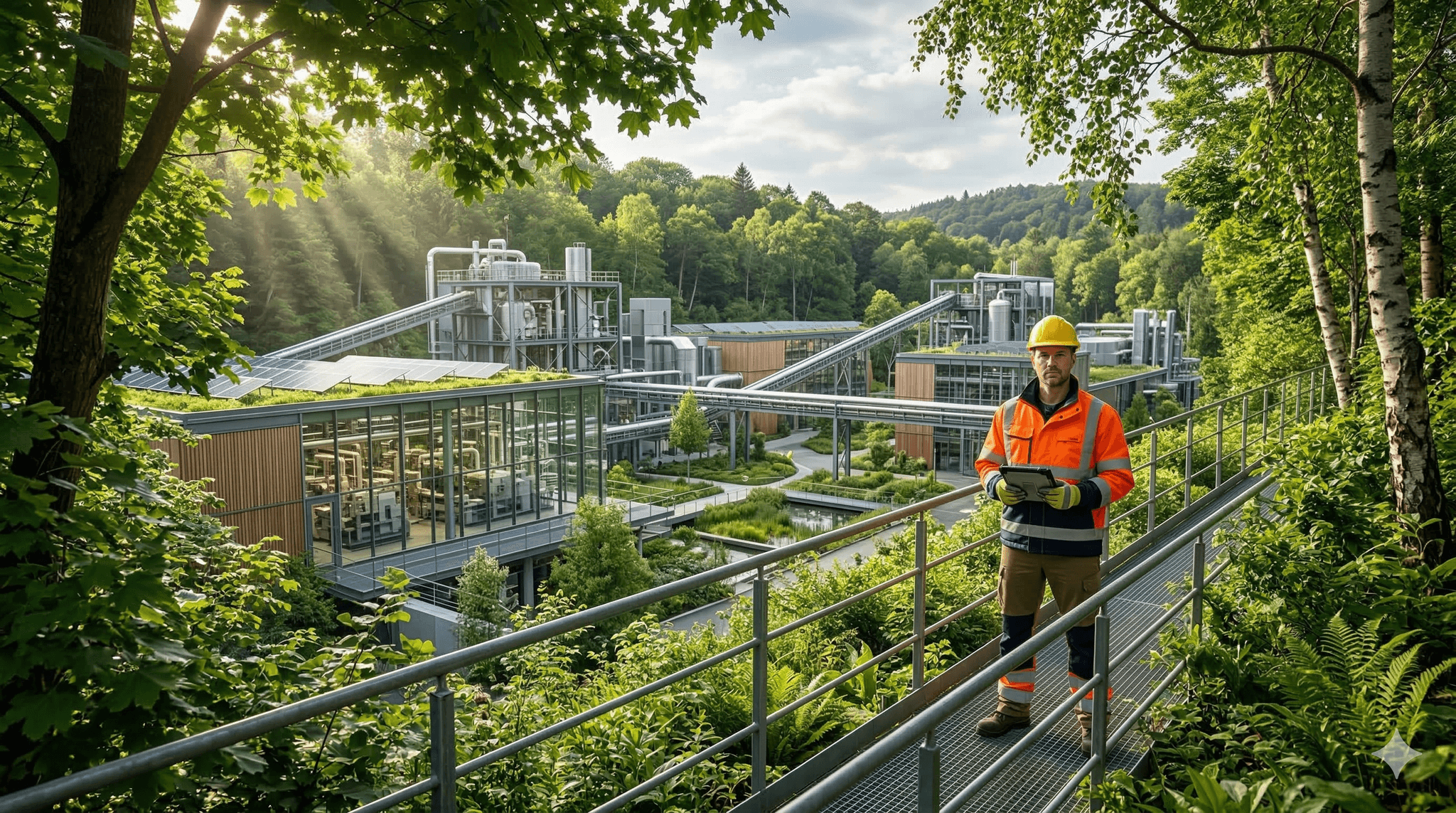
For modern enterprises, managing Environment, Health, and Safety (EHS) is no longer a peripheral, box-ticking exercise driven solely by retrospective compliance. Today, strategic EHS management is recognized as a core pillar that drives operational excellence, protects your most valuable asset—your workforce—and directly influences your company's bottom line, reputation, and resilience.
Yet, despite operating in an era of rapid digital transformation and Artificial Intelligence, a surprising number of safety professionals and operations directors are still fighting "paperwork fatigue." These teams spend countless hours transcribing handwritten data into complex spreadsheets, chasing physical signatures across massive industrial sites, and manually compiling monthly executive reports.
On the other end of the spectrum, many large enterprises invest millions into massive, rigid ERP systems. While these systems are excellent for back-office accounting, they often fail to reach the deskless workforce on the shop floor, the construction site, or out in the field. You can read more about why these massive systems fail at the frontline. This disconnect creates a dangerous "data black hole," resulting in operational delays, increased human error, and slow reporting of critical incidents.
To bridge this gap and cultivate a truly proactive safety culture, organizations need software built specifically for the realities of frontline operations. Whether you are an EHS Director, an ESG Officer, or a COO, here is an in-depth look at the absolute essential features you must look for in modern EHS management software.
1. A True "Mobile-First" Design and Seamless Offline Functionality
Hazards, equipment failures, and near-misses do not happen behind a desk; they happen where the actual work is done. Ensuring the proper digitization of your processes requires an EHS system designed from the ground up to empower deskless workers.
Flawless Offline Capability: Frontline teams frequently operate in environments with poor or non-existent internet connectivity—such as underground transport networks, remote construction sites, or deep inside manufacturing plants. Your EHS app must function seamlessly offline, allowing users to log data and complete audits without interruption. Once the device reconnects to a network, all data must sync automatically and securely.
Rich Media and Geolocation: A modern mobile application must leverage the native capabilities of smartphones. Workers should be able to take photos of a hazard, annotate them directly on their screens, record voice-to-text descriptions, and automatically save the exact GPS location of the incident.
Frictionless User Adoption: If the system is not incredibly simple, workers simply won't use it. High adoption rates are driven by clean, intuitive user interfaces (UI) that require zero technical knowledge, ensuring that technicians can report near-misses in seconds.
Empower Your Frontline Workforce
Equip your team with a mobile-first safety app designed for the realities of the shop floor and the field. Report hazards instantly, complete offline inspections, and manage digital permits to work without touching a single piece of paper.
2. No-Code Agility and Dynamic Artificial Intelligence (AI)
The business landscape and regulatory environments change rapidly. Waiting six months for your IT department or an external vendor to update a simple safety checklist is no longer acceptable.
Drag-and-Drop Builders: Look for a true "no-code" platform that allows operational leaders—not just software developers—to build, modify, and deploy digital forms and workflows instantly.
AI-Generated Workflows: Leading platforms now integrate Artificial Intelligence. By simply describing the process you need, the AI can automatically structure the digital form, drastically reducing the time it takes to digitize complex operations.
Rapid Deployment and Scalability: A no-code architecture enables rapid software deployment across multiple global sites, yielding a measurable Return on Investment (ROI) in weeks rather than years.
3. Automated Workflows and "Closed-Loop" Processes (CAPA)
Identifying a hazard is only the first step. Resolving it immediately and ensuring it doesn't happen again is what actually saves lives. To understand how to move forward, look into the importance of modernizing quality and corrective actions.
Instant Routing & Escalation: Defect reports or hazard identifications must trigger immediate Corrective and Preventive Actions (CAPA). The software should automatically route the issue to the appropriate technical or safety department based on location, asset, or severity.
Digital Permits to Work (PTW): A comprehensive system fully digitizes the permit issuance process. It enforces strict protocols (e.g., LOTO) and ensures digital approvals are secured before any hazardous work begins. Learn more about the operational value of digital permits.
4. Advanced Risk Management and KPI Tracking
Transitioning from a reactive to a proactive culture requires a deep understanding of your data. Read more about leaving reactive processes behind.
You must use your data to predict where the next accident might occur. Discover how to elevate risk assessments into business strategy.
The right platform should automatically track the most critical safety metrics, while simultaneously helping you build the right behaviors through the use of positive performance metrics.
5. Native Environmental and ESG Capabilities
Health & Safety is increasingly merging with broader Environmental, Social, and Governance (ESG) initiatives. Your EHS platform must act as the foundational data collection tool for your company’s sustainability goals.
Audit-Ready Reporting: As frameworks like CSRD (ESRS) become mandatory in Europe, your software should offer one-click reporting, saving weeks of manual labor. See exactly what capabilities your sustainability software needs.
Scope 3 Visibility and Transparency: Tracking value chain emissions is complex but crucial. Learn more about the role of software in corporate transparency.
Achieve Audit-Ready ESG Reporting
Stay ahead of mandatory regulations effortlessly. Access pre-built templates for CSRD, ESRS, and GRI, calculate your Scope 1, 2, and 3 GHG emissions, and easily track your Net-Zero targets on one unified platform.
6. Real-Time Business Intelligence (BI) Dashboards
You cannot proactively manage what you cannot measure in real time. Moving away from Excel means your data is always accurate and ready to drive strategic executive decisions.
Automated Dashboards: Critical metrics like LTIFR (Lost Time Injury Frequency Rate) and TRIR are calculated automatically. Discover how visual dashboards improve overall compliance.
Identifying Bottlenecks: By analyzing resolution times, executives can optimize resource allocation and achieve total operational savings that can reach up to 20%.
Summary: Connecting the Frontline to the Boardroom
Investing in the right EHS software is not just about eliminating paper. It is about securely connecting your frontline staff to your corporate executive strategy. By prioritizing a mobile-first experience, no-code agility, automated workflows, and real-time data management, you empower your teams to work safer, faster, and smarter. In doing so, you transform compliance from a mandatory cost center into a distinct competitive advantage.
Frequently Asked Questions (Q&A)
Q: What is the biggest challenge with traditional EHS systems? A: Traditional ERP and legacy systems often fail to reach the frontline workforce due to poor mobile interfaces and a lack of offline capabilities. This creates a "data black hole" where field workers cannot easily report hazards, leading to delayed incident response and high rates of human error.
Q: How does a "no-code" EHS platform benefit my team? A: A no-code platform empowers operational leaders—such as Safety Managers or Quality Directors—to build, modify, and deploy safety checklists and digital forms instantly without waiting for the IT department. This ensures rapid deployment and the agility to quickly adapt to new regulatory changes.
Q: Why is offline functionality critical for health and safety software? A: Deskless workers frequently operate in environments with poor or non-existent internet connectivity, such as underground transport sites, deep within manufacturing plants, or in remote construction zones. Offline functionality ensures they can log near-misses and complete inspections uninterrupted, syncing the data once a connection is re-established.
Q: How does modern EHS software support ESG (Environmental, Social, and Governance) reporting? A: Health and safety data is a core component of the "Social" and "Governance" pillars of ESG. Modern platforms act as the foundational data collection tool for sustainability goals, offering audit-ready reporting frameworks (like CSRD and GRI) and simplifying complex tasks like tracking Scope 3 carbon emissions across your value chain.
Q: What is a "closed-loop" CAPA process? A: A closed-loop Corrective and Preventive Action (CAPA) process refers to the automated routing and tracking of a hazard from the moment it is identified until it is successfully resolved and verified. Modern software automatically escalates issues to the right personnel, ensuring that critical safety defects never fall through the cracks.
The Ultimate EHS Software Buyer’s Checklist
Before you sign a contract or commit to a long-term software deployment, it is crucial to test the waters. Use this quick checklist to ask potential software vendors the right questions:
[ ] Is the mobile app truly offline-capable? (Tip: Ask them to demonstrate the app functioning smoothly in airplane mode).
[ ] Do I need an IT background to make changes? (Ensure it is a genuine no-code platform where you can build your own workflows via drag-and-drop).
[ ] Does the platform connect EHS with ESG? (Check if they offer Scope 1, 2, and 3 emissions tracking, and if they are ready for CSRD/ESRS compliance).
[ ] How long does deployment typically take? (A modern, agile system should take weeks to deploy, not months or years).
[ ] Can the software integrate with our existing ERP? (Ask about open APIs to ensure you won't be trapped in another data silo).
Ready to transform your frontline operations? Don't let paperwork slow down your safety culture. Discover how top-tier enterprises digitize their processes faster.